





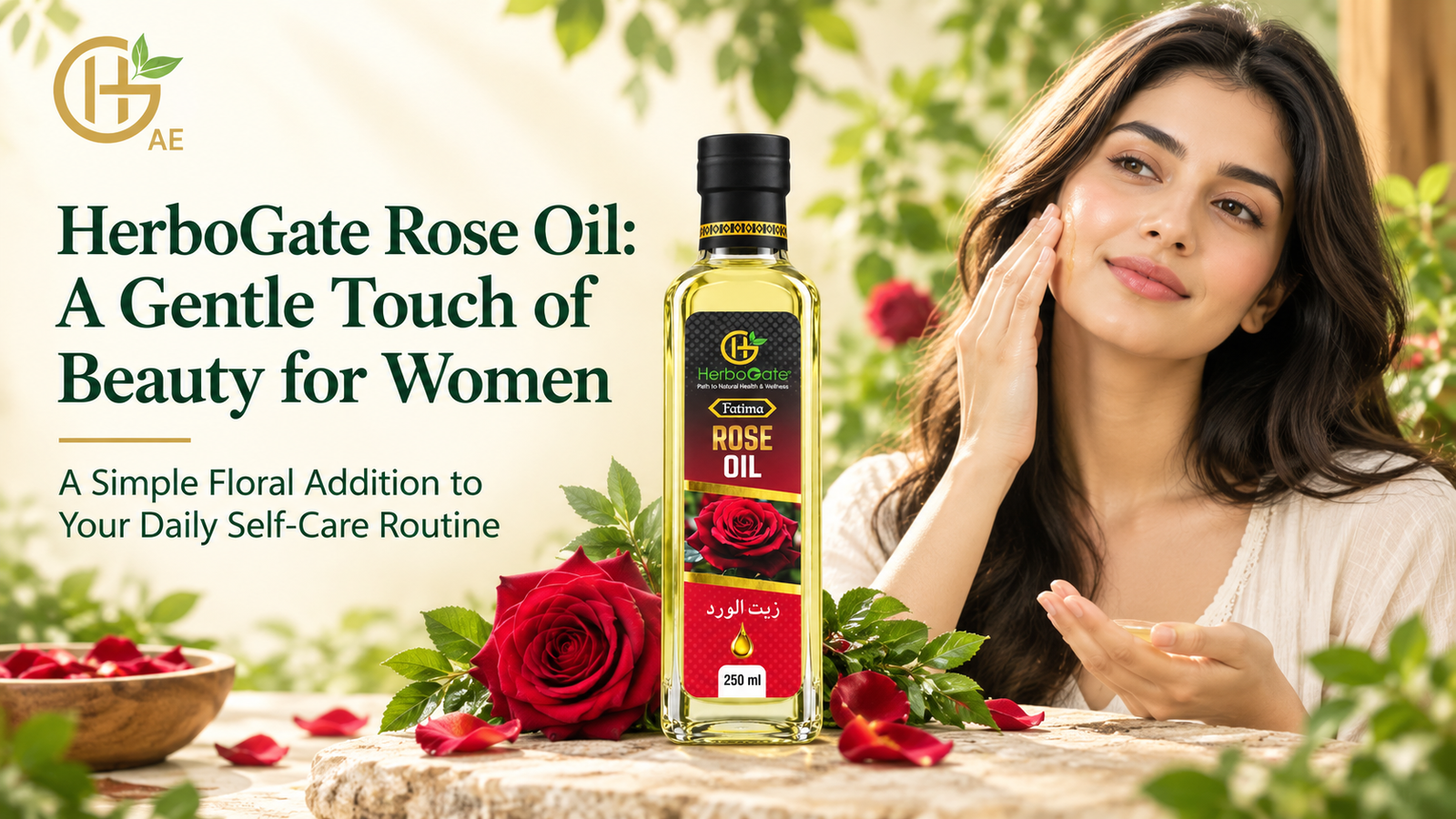
Healthy-looking skin starts with a consistent skincare routine, suitable products, and daily care. Across the UAE, Saudi Arabia, Kenya, and other parts of the world, many people are exploring facial oils as part of their beauty and self-care routines. Among the popular botanical ingredients used in beauty products, rose oil stands out for its floral character and place in traditional beauty rituals.
Whether you live in Dubai, Abu Dhabi, Riyadh, Jeddah, Nairobi, Mombasa, or another city, choosing skincare products that suit your skin type and climate can help you build a more comfortable and effective routine.
At HerboGate AE, we believe skincare should be simple, practical, and tailored to individual needs. In this guide, discover what rose oil is, how facial oils fit into a skincare routine, how to choose an appropriate oil, and what to consider before applying botanical oils to your skin.
What Is Rose Oil in Skincare?
Rose oil is an ingredient associated with the rose plant and is used in different cosmetic and personal-care formulations. Depending on the product, the term may refer to rose essential oil, rose-infused carrier oil, or a cosmetic blend containing rose-derived ingredients. These products are not identical, so checking the ingredient list is important.
Rose essential oil is highly concentrated and generally needs to be diluted before topical use. A rose-infused oil, on the other hand, is made by infusing rose material into a carrier oil. A commercial rose oil blend may contain several ingredients selected for fragrance, texture, and cosmetic use.
Rose oil is often included in beauty routines because of its floral fragrance and the soft, conditioned feeling that a suitable oil-based product can provide. Depending on its formulation, it may help reduce the feeling of dryness and leave skin feeling smoother.
However, not every product marketed as rose oil is designed for the face. Before using any oil on your cheeks, forehead, or other facial areas, confirm that the specific product is intended for that purpose and follow its label directions.
Potential Benefits of Rose Oil for Skin
Rose oil is popular in cosmetic products, but its benefits depend on the type of oil, the overall formulation, and the individual using it. It is helpful to understand what a skincare oil may offer without expecting it to solve every skin concern.
1. Helps Support Skin Moisture
Some facial oils help reduce moisture loss by forming a light layer on the skin. This can be particularly useful for people who experience dryness, roughness, or a tight feeling after cleansing.
When used appropriately alongside a moisturizer, a suitable facial oil may help the skin feel softer and more comfortable. The result depends on the ingredients and your skin’s needs.
Remember that oils and water-based moisturizers work differently. An oil does not automatically replace a moisturizer, particularly when your skin needs both water and ingredients that help retain moisture.
2. Adds a Smooth, Soft Feel
Dry skin can sometimes feel rough or appear less smooth. A compatible facial oil may improve the feel of the skin by providing lubrication and helping reduce surface dryness.
For some people, this makes an oil a useful optional step in an evening skincare routine. Use a small amount first and observe how your skin responds.
3. Complements a Relaxing Self-Care Routine
The floral aroma associated with rose products can make a skincare routine feel pleasant and relaxing. Applying a suitable cosmetic product slowly can also provide an opportunity to pause and enjoy a few minutes of personal care.
Fragrance is a matter of preference, however, and fragranced products are not suitable for everyone. If you have sensitive skin or a history of fragrance allergies, choose products carefully and consider fragrance-free alternatives.
4. Fits Into a Simple Beauty Routine
You do not need a large collection of products to maintain a consistent skincare routine. Depending on your skin type, a gentle cleanser, moisturizer, sunscreen, and one optional facial oil may be enough for everyday care.
Rose oil can be part of this routine when the formulation is suitable for your skin. It should be viewed as a cosmetic option rather than a guaranteed treatment for acne, dark spots, wrinkles, or other skin conditions.
Is Rose Oil Suitable for Every Skin Type?
There is no single facial oil that works equally well for everyone. Your skin type, existing skincare products, climate, and sensitivity all matter.
Dry Skin
People with dry skin may appreciate a suitable facial oil because it can help the skin feel softer and reduce the feeling of dryness. Applying it alongside a moisturizer may be helpful, depending on the formulation.
Avoid assuming that using more oil will always improve hydration. Too much product can feel uncomfortable or leave a heavy finish.
Oily Skin
Oily skin still needs appropriate hydration, but heavy or unsuitable oils may feel greasy or contribute to clogged pores in some people.
If your skin is oily, choose a product specifically formulated for facial use and introduce it gradually. A lightweight, non-comedogenic moisturizer may be a better starting point than a rich facial oil.
Combination Skin
Combination skin often has an oilier forehead, nose, and chin, with drier areas elsewhere. You may prefer using different amounts of moisturizer across your face rather than applying an oil everywhere.
If you try a facial oil, start with a very small amount and observe how each area responds.
Sensitive Skin
Sensitive skin requires extra care, particularly when a product contains essential oils, fragrance, or several botanical extracts.
Natural ingredients can still cause irritation or allergic reactions. If your skin frequently becomes red, itchy, or uncomfortable after using skincare products, consider fragrance-free options and seek advice from a qualified dermatologist when needed.
Mature Skin
As skin changes with age, some people notice increased dryness or a less comfortable skin texture. A suitable moisturizing routine can help improve the appearance and feel of dry skin.
A facial oil may complement that routine, but it should not be expected to reverse aging or remove established wrinkles. Daily sun protection and consistent skincare remain important.
How to Use Rose Oil in a Skincare Routine
Using skincare products correctly is just as important as choosing them. Before adding rose oil to your routine, read the product label and confirm whether it is intended for facial use.
Step 1: Cleanse Your Face Gently
Begin with a gentle cleanser that removes everyday dirt, sunscreen, and excess oil without leaving your skin feeling uncomfortably tight.
Use lukewarm water rather than very hot water, and avoid aggressive scrubbing. Pat your face dry with a clean towel.
Step 2: Apply Your Usual Moisturizer
If your routine includes a moisturizer, apply it according to its directions. Keeping your skin comfortable and hydrated is an important part of everyday skincare.
Some people prefer applying a facial oil after moisturizer, while others use products in a different order depending on the formulation. Follow the manufacturer’s instructions and avoid layering too many new products at once.
Step 3: Apply Only a Suitable Facial Oil
If the product is explicitly suitable for facial use, start with the recommended amount. Spread it gently without pulling or rubbing the skin aggressively.
Do not apply concentrated rose essential oil directly to your face unless a qualified professional and the product’s instructions specifically support the intended use. Essential oils often require appropriate dilution, and an unsuitable concentration can irritate the skin.
If your HerboGate rose oil is labelled for a different purpose, use it only as directed rather than assuming it is suitable for facial application.
Step 4: Use Sunscreen During the Day
In sunny environments such as Dubai, Abu Dhabi, Riyadh, and many parts of Kenya, sun protection is an important part of a daily skincare routine.
Use a broad-spectrum sunscreen with SPF 30 or higher and reapply according to its directions, particularly after swimming, sweating, or extended outdoor activity.
A facial oil does not replace sunscreen, and applying oil alone will not protect your skin from ultraviolet radiation.
Step 5: Monitor Your Skin
Introduce one new product at a time. Watch for itching, redness, burning, swelling, or new breakouts. Stop using the product if you experience a reaction.
Patch testing a new product on a small area of skin according to its instructions can help identify possible irritation before wider use. However, a patch test cannot guarantee that a reaction will never occur.
Skincare Tips for Dubai and the UAE
The UAE’s climate can involve strong sunlight, air conditioning, heat, and low humidity indoors. These conditions may affect how your skin feels throughout the day.
Consider the following practical habits:
- Choose gentle cleansers: Avoid products that leave your skin feeling stripped or tight.
- Moisturize consistently: Use a moisturizer that suits your skin type, even if your skin becomes oily during the day.
- Use sunscreen: Protect exposed skin every day and follow the product’s reapplication instructions.
- Keep your routine practical: A few suitable products used consistently are often easier to maintain than a complicated routine.
- Adjust for comfort: If a rich oil feels too heavy in hot weather, consider a lighter moisturizer or use an appropriate facial oil less frequently.
People living in air-conditioned offices or homes may also experience dryness despite living in a hot climate. Pay attention to how your skin actually feels rather than choosing products based only on the weather.
Skincare Tips for Saudi Arabia and KSA
Across Saudi Arabia, including Riyadh, Jeddah, Dammam, and other cities, skincare needs can vary with temperature, humidity, time spent outdoors, and indoor air conditioning.
A practical routine starts with gentle cleansing, suitable moisturization, and daily sun protection. If you enjoy botanical skincare products, introduce them carefully and select formulations appropriate for your skin type.
For dry-feeling skin, a moisturizer and a compatible facial oil may help improve comfort. For oily or acne-prone skin, lightweight, non-comedogenic products may be preferable.
Do not rely on rose oil or any other cosmetic oil to treat persistent acne, pigmentation, eczema, or unexplained rashes. A dermatologist can help you identify the cause and choose suitable treatment.
Skincare Tips for Kenya and Other International Markets
Skincare requirements can vary widely across Kenya, from coastal areas such as Mombasa to cooler highland regions and busy urban environments such as Nairobi.
Heat, humidity, dust, frequent outdoor activity, and sun exposure may influence which products feel comfortable. People living in humid areas may prefer lighter formulations, while those experiencing dryness may benefit from richer moisturizers.
The same principle applies to customers across Africa, the Middle East, and other international markets: choose products based on your skin’s needs, not simply on your location.
Keep skincare products stored according to their labels, avoid exposing them to excessive heat or direct sunlight, and check their expiry dates. If you travel frequently, choose a simple routine that is easy to maintain.
Rose Oil vs. Other Facial Oils: What Is the Difference?
Rose oil is one of several ingredients used in cosmetic oils. Different oils have different textures, compositions, and recommended uses.
Rose oil: Often selected for its floral fragrance and use in botanical beauty products. The exact purpose depends on whether it is an essential oil, an infused oil, or a formulated blend.
Jojoba oil: Commonly used in cosmetic formulations for its skin-conditioning properties and lightweight feel, although individual responses can vary.
Argan oil: Often included in skincare and haircare products to condition and soften.
Sweet almond oil: Used in some cosmetic products as an emollient. People with nut allergies should check product information carefully and seek professional advice if uncertain.
Rosehip oil: Different from rose essential oil. It is obtained from rose plant seeds and is used in some facial-care products.
These ingredients are not interchangeable in every situation. The best choice depends on the specific formulation, your skin type, possible allergies, and the purpose of the product.
Common Mistakes to Avoid When Using Facial Oils
A few simple precautions can help you make more informed skincare decisions.
Using too much product: More oil does not necessarily mean better results. Start with the recommended amount.
Applying undiluted essential oil: Concentrated essential oils can irritate the skin. Use them only in an appropriate formulation and according to reliable directions.
Ignoring the ingredient list: Check whether the product is intended for facial use and review its ingredients, warnings, and directions.
Expecting immediate results: A cosmetic product may improve the feel of dry skin, but changes in appearance vary between individuals. Avoid expecting guaranteed results.
Skipping sunscreen: Facial oils cannot replace sun protection.
Continuing despite irritation: Stop using a product that causes burning, itching, swelling, or persistent redness.
Using oils to treat medical conditions: Cosmetics should not replace professional care for persistent acne, eczema, infections, or other skin concerns.
How to Choose a Quality Skincare Oil
When buying rose oil or another facial oil online, look beyond attractive packaging and promotional claims.
First, check the full product name and ingredient list. Confirm whether you are purchasing an essential oil, a carrier oil, an infused oil, or a blended cosmetic product.
Second, look for clear instructions explaining how the product should be used. A product intended for hair, massage, or general body care should not automatically be assumed suitable for the face.
Third, check the manufacturer’s information, packaging integrity, storage directions, expiry date, and any warnings about allergies or sensitive skin.
Fourth, be cautious about claims promising to eliminate wrinkles, cure acne, remove all dark spots, or produce guaranteed results. Individual skin responses vary, and these outcomes should not be assumed from the presence of a botanical ingredient.
Finally, buy from a retailer that provides clear product information and a straightforward way to ask questions about its range.
At HerboGate AE, customers can explore the available collection of oils and personal-care products online. Always review each product’s specific description and directions to determine whether it is appropriate for your intended use.
Why Choose HerboGate AE for Your Personal-Care Shopping?
HerboGate AE provides an online destination for customers exploring oils and other products for everyday personal care and wellness.
Whether you are browsing from Dubai, Abu Dhabi, another part of the UAE, Saudi Arabia, Kenya, or a different international market, start by identifying the product category that matches your needs.
Before purchasing, read the product details, check its intended use, and confirm delivery availability for your location. Product availability and shipping options can vary by destination, so review the information provided during checkout or contact the company for clarification.
Choose products thoughtfully and build a routine that prioritizes consistency, comfort, and appropriate sun protection.
Final Thoughts: Build a Skincare Routine That Works for You
Rose oil can be an appealing addition to a personal-care routine when it is formulated for the intended use and suits your skin. Its place in skincare is best understood as part of a broader routine that includes gentle cleansing, suitable moisturization, and daily sun protection.
From Dubai and the wider UAE to Saudi Arabia, Kenya, and other international destinations, the most useful skincare routine is one that reflects your individual needs rather than relying on exaggerated promises.
Explore the available oils and personal-care products at HerboGate AE and take a thoughtful approach to everyday skincare.
Visit: https://herbogate.ae/
Skincare note: This article provides general cosmetic information, not medical advice. Product suitability depends on its ingredients and directions. Consult a qualified healthcare professional for persistent skin problems or concerns about allergies.